Electronics Cooling and Thermal Analysis

The electronics sector, where everything is being made smaller and more compact, is one of the sectors that benefits most from CFD analysis. Cooling performance can be calculated before your product is ever built.

Analysis at four scales
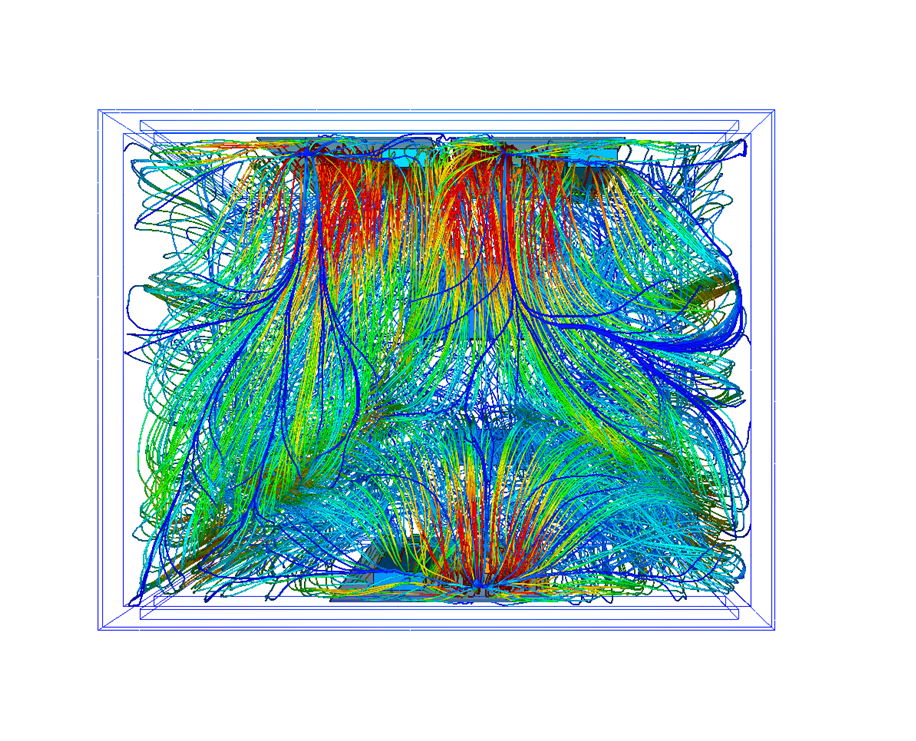
CFD analysis of airflow inside an electronics cabinet, shown as streamlines
Scale

Analysis at Four Scales

Electronics cooling analyses are set up at four different levels depending on the scale of your problem:

  1. 01Component level — individual component temperatures and thermal resistance
  2. 02Board level — temperature distribution across the PCB and component interaction
  3. 03Device level — airflow inside the enclosure, fan and ventilation design
  4. 04Cabinet level — cooling and by-pass flows at rack/cabinet scale
Outputs

What CFD Analysis Tells You

Some of the information electronic board, device and system designers can obtain through CFD analysis:

  1. 01Component, board and device temperatures
  2. 02Heating and cooling times
  3. 03Air velocities
  4. 04Pressure losses
  5. 05Heat losses and gains
  6. 06By-pass air flows
  7. 07Cooling system effectiveness
  8. 08Cold plate effectiveness
  9. 09Condensation risk
From the field

Project Example

01

AC/DC Converter — Natural Convection Cooling

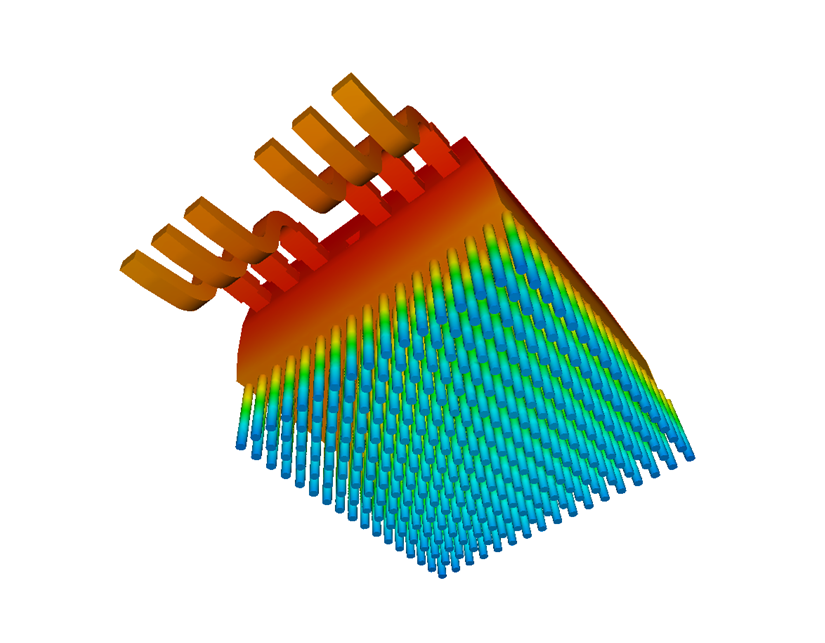
Natural convection air flow and heat transfer inside an AC/DC converter were examined with CFD analysis. In this fanless design, the component temperatures that would be encountered were calculated, establishing before production whether critical components stayed within their temperature limits.

FAQ

Frequently Asked Questions

When should electronics cooling analysis be done?

At the earliest possible design stage. Analysis carried out while board layout, enclosure ventilation and fan selection can still be changed prevents the large majority of thermal problems that otherwise surface after prototyping.

Is natural convection enough, or do I need a fan?

That depends on power density, enclosure geometry and ambient temperature. We solve both scenarios with CFD analysis and show numerically whether a fanless design can keep critical components within their temperature limits.

Which level of analysis do I need?

If the problem is a single component overheating, component or board level; if it is air distribution inside an enclosure and fan selection, device level; if multiple devices heat a shared environment, cabinet level. We define the scope together.

Do you validate against measurements?

If you have thermal measurements we calibrate the model against them. Where no measurements exist, we state material and boundary condition assumptions explicitly in the report so the results can be interpreted with the right confidence.

Do you have a thermal problem in your product?

Tell us about your board, device or cabinet, and we'll calculate cooling performance before you build it.

Get In Touch